
When Semiconductor Labor Risk Becomes Supply Chain Risk
 Semiconductor supply chains are often analyzed through the lens of technology, capacity, materials, and geopolitics. Companies monitor wafer availability, fabrication capacity, equipment access, and critical materials because these factors directly influence component availability.
However, another risk factor is gaining attention: labor stability.
Micron’s Taiwan operations recently faced potential strike action after labor unions representing thousands of workers raised concerns over compensation and profit-sharing arrangements. Because Taiwan plays an important role in global memory production, any prolonged disruption could create another variable for a semiconductor market that is already operating under tight conditions.
The situation highlights a broader point. Semiconductor supply chains depend not only on machines and materials, but also on the people who operate, maintain, and support the manufacturing ecosystem.
Why Semiconductor Manufacturing Is Sensitive to Labor Disruptions
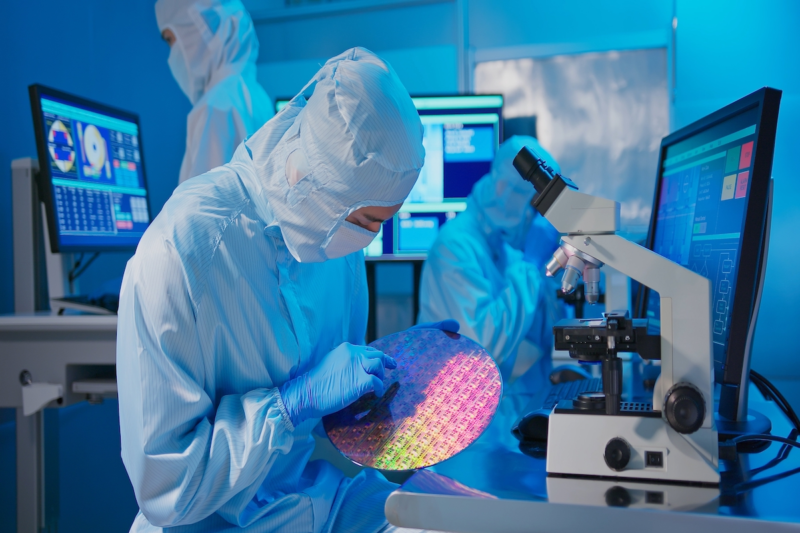
Semiconductor fabrication is one of the most complex manufacturing processes in the world. A modern fab operates continuously and requires highly specialized teams responsible for equipment operation, process control, maintenance, quality assurance, testing, and facility management.
Unlike many manufacturing environments, semiconductor production cannot simply pause and restart without consequences.
Fabs operate with strict process requirements. Changes in operating conditions, maintenance schedules, or production flow can affect yields and output. Even short interruptions may require careful recovery procedures before production returns to normal levels.
This sensitivity means labor disruptions can create supply chain effects even when the underlying technology and equipment remain available.
Why Regional Concentration Increases the Risk
Semiconductor production is globally distributed, but specific companies and regions remain highly important for certain categories.
Taiwan, South Korea, the United States, Japan, and other regions each play specialized roles in semiconductor manufacturing. Memory production, advanced packaging, foundry capacity, materials, and equipment are often concentrated among a limited number of suppliers.
That concentration creates efficiency, but it also creates exposure.
When a disruption occurs at a major manufacturing location, the impact can extend beyond the company directly affected. Customers may face longer lead times, tighter allocation, delayed shipments, or increased pressure to find alternative sources.
This is why supply chain resilience increasingly depends on understanding operational risks, not just technical capability.
Why Production Continuity Requires More Than Capacity
Companies often measure semiconductor resilience by looking at available capacity. However, capacity only creates value when production remains stable.
A fab may have advanced equipment and strong demand, but it still depends on:
- Skilled technicians and engineers
- Reliable facility operations
- Maintenance expertise
- Quality control processes
- Stable supplier relationships
Each of these factors contributes to whether semiconductor output reaches customers as expected.
This creates a broader definition of supply chain risk. Availability is not only determined by whether a factory exists. It is determined by whether the entire operating system around that factory remains functional.
Where Inventory Planning Fits Into the Equation
Labor disruptions are difficult to predict, which makes proactive planning more important.
Companies that depend on critical semiconductor components may need to consider how much exposure they have to specific suppliers, regions, and manufacturing locations. For long lifecycle industries, a disruption lasting weeks or months can create significant challenges if replacement options are limited.
Strategic inventory planning can provide flexibility during periods of uncertainty. However, securing inventory is only effective if those components remain usable over time.
Semiconductors are sensitive to moisture, electrostatic discharge, temperature variation, contamination, and handling conditions. Controlled storage environments help preserve component integrity through environmental controls, ESD protection, traceability, and documented handling.
The Broader Supply Chain Lesson
The semiconductor industry is built on precision, but precision depends on more than technology.
Labor stability, facility operations, supplier relationships, materials, equipment, and inventory management all influence whether components reach customers when needed.
As semiconductor supply chains become more complex and more globally interconnected, companies will need to evaluate a wider range of risks. Labor disruptions may not receive the same attention as shortages or geopolitical events, but they can create similar consequences when they affect critical production sites.
For manufacturers that depend on semiconductor availability, understanding operational risk is becoming just as important as understanding technical capability.