
Gallium and Germanium Supply Gaps Could Persist Through 2030
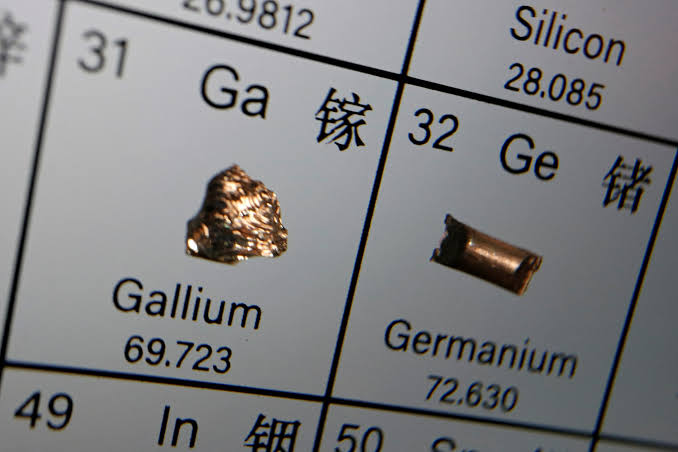 Gallium and germanium constraints are no longer looking like a temporary response to export controls. New supply analysis suggests the problem could persist for years, even as Western governments and producers invest billions of dollars in alternative production.
Prices for both metals outside China are now roughly nine to ten times their 2023 levels. More importantly, planned non-Chinese production is not expected to come close to satisfying demand in the near term. By the end of 2026, non-Chinese gallium capacity is projected at roughly 20 metric tons, leaving supply about 678 tons below ex-China demand. Germanium production outside China is expected to reach approximately 31 tons, leaving a 177-ton deficit. (Reuters)
For OEMs and EMS providers, the significance goes far beyond raw material pricing. Gallium and germanium sit upstream from semiconductor, optical, communications, and defense components that may be difficult to redesign or replace.
Why New Production Will Not Close the Gap Quickly
Alternative supply is being developed across the United States, Canada, Europe, and other regions. However, building new material capacity takes time.
Mining is only part of the challenge. Gallium and germanium are often recovered as byproducts of other metals, which makes production economics dependent on existing refining operations. New projects also require processing infrastructure, technical qualification, reliable feedstock, and customers willing to commit to long-term supply.
Even if announced projects proceed, ex-China gallium users could still depend on China for roughly 65% of supply in 2030. Non-Chinese germanium capacity could cover only about 48% of projected demand. (Reuters)
That makes this different from a short-lived shortage. The underlying issue is structural capacity.
Why These Metals Matter to Electronics
Gallium and germanium support several technologies that are increasingly important to modern electronics.
Gallium-based semiconductors are used in radio frequency electronics, power devices, telecommunications infrastructure, radar, satellite communications, electric vehicles, data centers, LEDs, and photonics. Gallium arsenide and gallium nitride are especially valuable where high-frequency performance, efficiency, or power handling matter.
Germanium plays an important role in fiber-optic networks, infrared optics, semiconductor applications, and high-efficiency solar technologies. In the United States, germanium has historically been heavily used in fiber optics and infrared systems, including surveillance, reconnaissance, and thermal imaging applications. (USGS Publications)
These are not niche applications from a supply chain perspective. They touch AI infrastructure, communications networks, defense systems, aerospace platforms, power electronics, and industrial equipment.
Higher Prices Do Not Guarantee Availability
One of the most important implications is that price may stop being the primary constraint.
In a normal commodity shortage, buyers may be able to secure material by paying more. Gallium and germanium present a different problem because production is highly concentrated and export access can depend on licensing, policy, and supplier decisions.
Export controls have already introduced longer approval timelines and greater uncertainty for international buyers. Alternative supply remains limited enough that willingness to pay more does not necessarily create additional physical availability.
For component buyers, that changes the risk calculation. An RF device, optical component, infrared sensor, or power semiconductor may become difficult to obtain because of constraints several layers upstream from the finished part.
Substitution Can Create a Different Dependency
Material substitution is another possible response, but it is rarely simple.
Moving from one semiconductor material system to another can require product redesign, engineering validation, performance testing, supplier qualification, and customer approval. In long lifecycle sectors such as aerospace, defense, medical, automotive, and industrial manufacturing, that process can take significant time.
Substitution can also move rather than eliminate the risk. Replacing a gallium arsenide application with another compound semiconductor may introduce dependence on indium, phosphorus, or another constrained material.
The most useful question is therefore not simply whether an alternate exists. It is whether that alternate can be qualified, produced at scale, and supported over the full lifecycle of the program.
Where Inventory Planning Fits
For OEMs and EMS providers, the first step is understanding which qualified components carry upstream gallium or germanium exposure.
That can include RF devices, optical components, infrared systems, communications hardware, power semiconductors, wafers, and specialized modules.
For production-qualified inventory that is already manufactured and available through traceable channels, securing physical supply ahead of program need can reduce exposure to future material constraints. Inventory ownership models can also separate supply assurance from immediate working capital requirements, allowing inventory to be acquired and held for scheduled future consumption.
The distinction is important. This approach makes the most sense for qualified components or wafers tied to known demand. It does not solve export controls, validate substitute materials, or justify speculative purchases of unqualified raw metals.
Planning Around a Multiyear Constraint
Gallium and germanium have moved beyond a temporary export-control story.
The more important development is that alternative production is not scaling quickly enough to close projected deficits. Even with new investment, dependence on Chinese supply is likely to remain substantial through the end of the decade.
For electronics manufacturers, that means material exposure needs to be considered earlier in lifecycle and inventory planning. The risk may not appear first as a component shortage. It may begin with a metal several tiers upstream whose supply cannot expand fast enough to meet demand.
Understanding that exposure before availability becomes critical gives supply teams more options than reacting after qualified components have already disappeared from the market.