
Memory Spot Prices Are Softening. Should Buyers Wait?
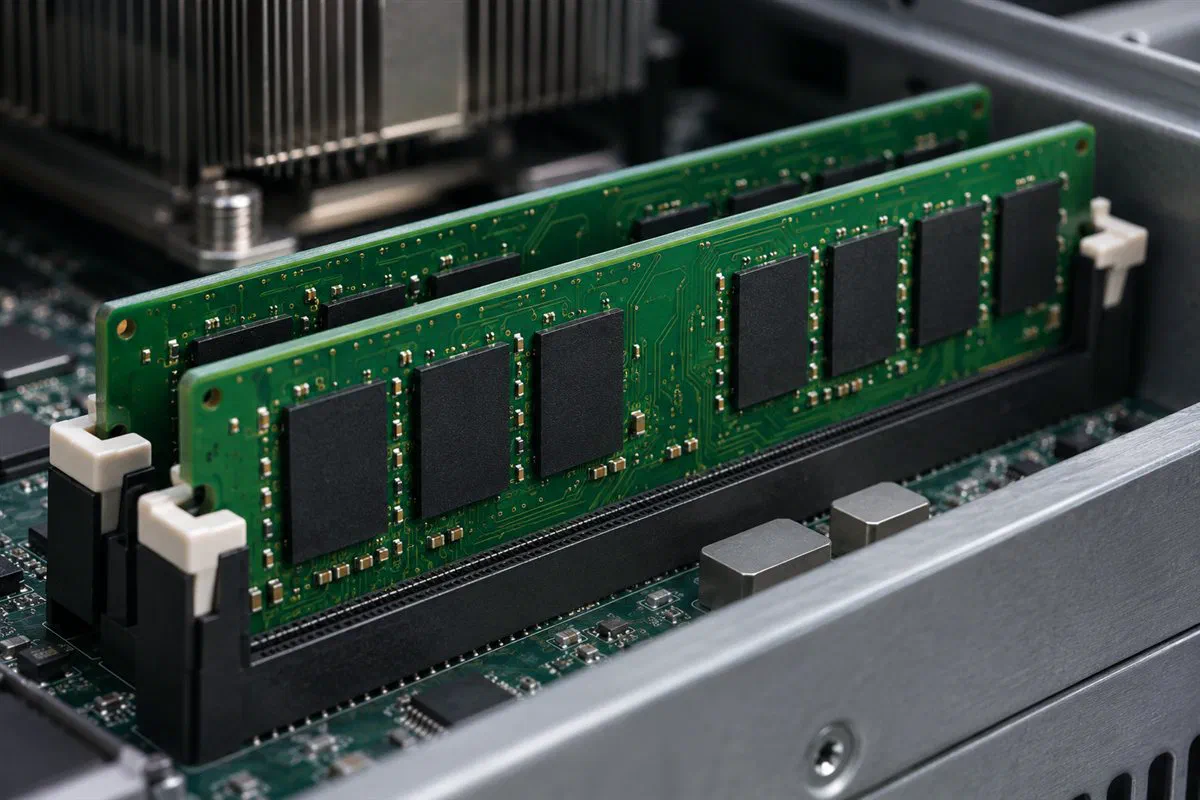 Memory buyers have a fresh reason to revisit their quotes. A November 18 market update reports that mainstream DDR4 1Gx8 3200MT/s spot prices slipped 1.43% over the preceding week, while branded DDR5 chip prices remained largely stable. Weak NAND demand also left spot and contract prices more than 20% apart. Those diverging memory price trends suggest room for negotiation in parts of the market, rather than a uniform decline across every memory product.
For OEM and EMS purchasing teams, the useful question is how much demand can safely remain uncommitted while prices develop. Waiting can preserve cash and reduce acquisition cost. It can also consume the time needed to receive, inspect, and release an approved part before production. The decision should begin with that deadline, then work backward to the quantity that genuinely has room to wait.
Check Whether the Price Signal Applies to Your Part
Start with the approved manufacturer part number, density, organization, speed, package, temperature grade, and supplier. A spot quotation for a DRAM chip does not establish the delivered price of a qualified module. Likewise, a NAND wafer price does not represent the cost of a finished SSD or embedded storage device.
Generation matters too. DDR4 and DDR5 differ electrically and physically and are not interchangeable. A cheaper alternative only becomes useful when engineering confirms compatibility and the required approval is complete.
Ask suppliers to refresh quotes for the actual approved parts and quantities. Compare the same delivery destination, payment terms, freight treatment, and acceptance requirements. Request the quote's expiration date and whether the offered stock is physically available, allocated, or dependent on a future receipt. A market decline is a negotiating prompt; the usable offer is what changes the purchasing plan.
Identify the Last Responsible Order Date
Map released inventory and confirmed incoming supply against dated consumption. Include service demand and material already reserved for other programs. Count incoming parts from the date they can become usable, allowing for transportation, receiving, inspection, and any required testing.
For each uncovered build, subtract those activities and the supplier's quoted lead time from the required production date. Add the contingency your operation needs for delivery variation. That establishes an order deadline that can be checked against the supplier's latest commitment.
For steady consumption, a quick check is: Time available to wait = usable inventory coverage - replenishment time - contingency reserve. Express all three in the same units, such as weeks. A zero or negative result leaves no room to defer under those assumptions. For uneven demand, use the dated build schedule instead of average coverage.
Put a Dollar Value on Waiting
Consider a hypothetical OEM consuming 1,000 approved memory devices per week. It has 4,000 released devices, no incoming supply, and a replenishment cycle of three weeks from order placement to usable inventory. Assume steady consumption and a required one-week contingency reserve.
The four-week stock position leaves no discretionary waiting time for the next replenishment: three weeks cover replenishment and one provides the reserve. Delaying the order by a week would spend that protection, even though the warehouse would still hold parts today.
After securing the immediate replenishment, suppose a separate, later requirement for 2,000 devices has time remaining before its own order deadline. At an illustrative quote of $40 per device, a possible 2% reduction would save $1,600. This is a scenario, not a price forecast. Compare that saving with the incremental freight, inspection, rescheduling, or other costs that a delayed purchase could create. A $2,000 emergency shipment would already exceed the acquisition saving.
Keep the two requirements separate. Secure the quantity needed to maintain coverage, and negotiate the later requirement within its own order deadline. That avoids making every purchase depend on one prediction about the market's next move.
Separate Purchase Timing From Delivery Timing
A scheduled-release order can reduce the amount delivered to the assembly plant at once, but it may still commit the buyer to the entire quantity and price. Confirm cancellation, rescheduling, and price-adjustment terms before treating staggered deliveries as purchasing flexibility.
Consider an OEM with memory allocated at a supplier, purchased stock at an external warehouse, and released devices at its assembler. Separate reports can make the same quantity appear twice or hide a transfer delay. Reconcile those locations into one view of ownership, usable quantities, and release dates before deciding how much demand can wait.
Where approved inventory is already purchased, storage and fulfillment of customer-owned material can support releases matched to production. That arrangement addresses handling and availability; it does not eliminate exposure to a subsequent market-price decline. Include storage and fulfillment costs when comparing it with later purchases.
Require visibility into the quantity held, ownership, release authority, and dispatch lead time. Inventory outside the plant contributes to coverage only if the team can obtain it within the planned replenishment window.
Give Every Deferred Purchase a Review Trigger
Record the deferred quantity, latest acceptable order date, target quote, and person responsible for the next review. Revisit the decision when consumption changes, a supplier shortens quote validity, or a promised delivery moves.
Softer prices create an opportunity to improve a purchase. The strongest response is a bounded decision: protect the next production requirement, negotiate the demand that has time to wait, and know exactly when that waiting period ends.