
When Should Electronics Buyers Hold Stock Near the Assembly Plant?
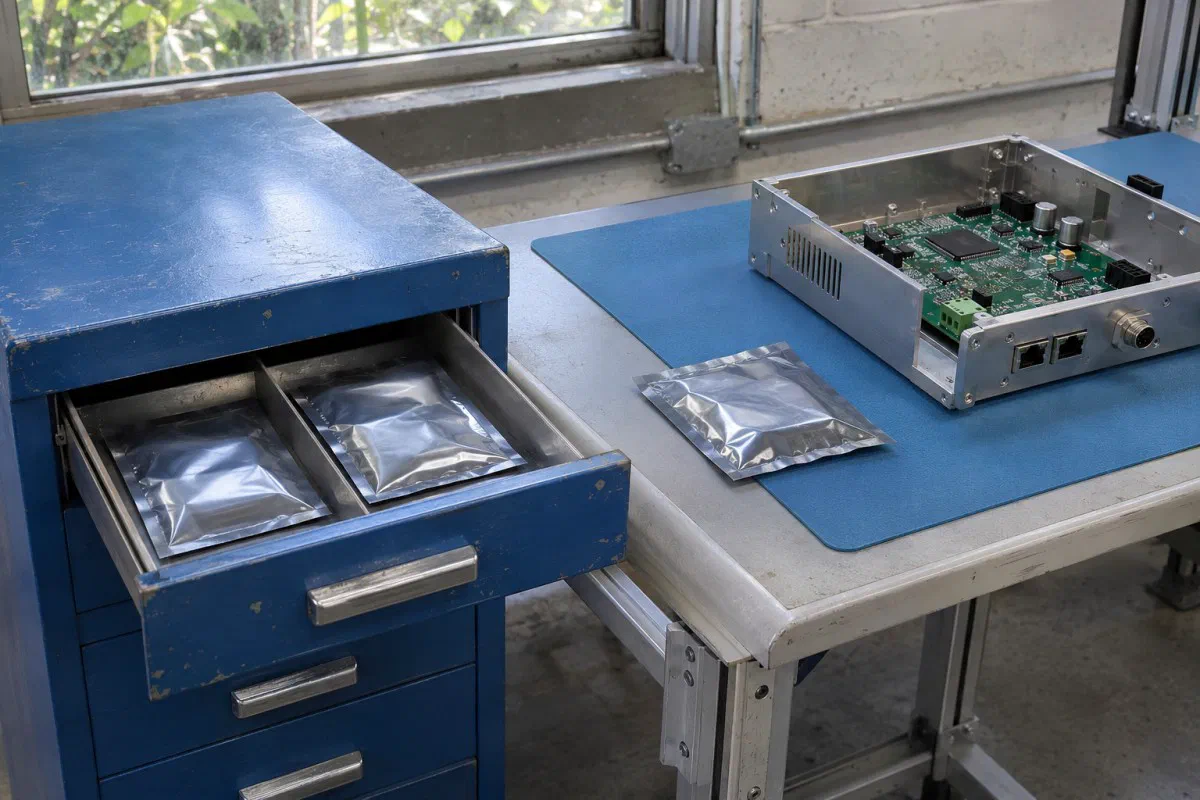 A supplier in Taiwan has a reel ready to ship. An assembly plant in Ohio needs it before Thursday's first shift. The buyer can get a price for priority airfreight in minutes, but the decision depends on when the plant can issue the parts to production. If the earliest usable delivery is Friday, even a modest freight premium buys the wrong day.
That distinction matters this November. Technology shipments are putting more pressure on air capacity from Asia to North America than on routes from Asia to Europe, according to the November airfreight outlook. A separate freight report identifies Taiwan among the tightest origins for outbound air capacity. For a buyer deciding where to keep a critical component, the place to start is the first build an overseas shipment could miss.
Work Back From the First Uncovered Shift
Consider a hypothetical plant that uses 1,000 power-management chips per production day. At the start of Monday it has 3,000 released chips, enough for Monday through Wednesday. Its next regular shipment is confirmed for release before the following Monday's shift. Thursday and Friday are uncovered, a gap of 2,000 chips.
Ask the forwarder for the earliest pickup the supplier can meet, the booked departure, the expected customs release, and the delivery appointment. Then ask receiving when the reel can clear inspection and reach the line. In this example, assume the best international expedite would release the parts at the plant before Friday's shift. It can cover Friday. Production still needs a plan for Thursday. An airport arrival on Wednesday night would sound reassuring on a status call while leaving that same shift exposed.
Decide How Much Stock Needs to Be Nearby
Suppose the component ships on a 3,000-piece reel. One reel already held at a nearby warehouse could cover both shifts if the warehouse can release it on Wednesday and the plant can accept it that afternoon. Only 2,000 pieces are needed for the immediate gap. If the assembler takes the full reel, record the remaining 1,000 in plant inventory before releasing another shipment.
First look for a reel the OEM already owns and can reposition through its ordinary replenishment route. Moving it closer may add handling and reduce its availability to other plants. Buying an additional reel also ties up cash and leaves the buyer exposed if the assembly changes. Check both routes before asking finance to authorize more inventory.
Compare the Cost Over the Same Period
Assume an additional reel costs $2 per chip, or $6,000, and will eventually be consumed by a firm program. At an illustrative annual capital cost of 12%, holding that reel for a quarter costs $180 in financing. Add an assumed $90 for incremental inbound freight, storage, and handling, plus $60 for one local delivery. The incremental cost for the quarter with one release is $330. Finance still needs to fund the $6,000 purchase.
Suppose the forwarder quotes an extra $900 above normal freight for the Friday delivery. In a quarter with one such disruption, the local reel costs $570 less under these assumptions and can cover Thursday's build. If no disruption occurs, the $180 financing and $90 in other costs still accrue. Use the plant's past expedite invoices and missed shifts to judge how often the reserve would earn its keep. If a redesign could strand the reel, include the expected cost of unused pieces in the comparison.
Confirm Who Can Release the Reel
A local reserve only helps the shift if someone can draw against it. Have the OEM buyer and assembly partner agree on the manufacturer part number, the plant entitled to the stock, and who can authorize a release when the usual buyer is unavailable. Confirm the warehouse cutoff and the plant's receiving hours for the shift most likely to need it.
If a partner handles storage and fulfillment of customer-owned inventory, request a trial release against an actual production schedule. Record when the warehouse accepts the instruction, when the reel reaches receiving, and when the assembler clears it for use. The last timestamp gives planning a defensible local delivery time.
For the Ohio plant, Thursday is the deciding shift. If the assembler can move another fully kitted job into that slot and recover the displaced build, an occasional Friday expedite may be sufficient. If Thursday's customer shipment depends on that reel, reserving it nearby buys two days of production coverage. Revisit the decision when the build schedule, the overseas route, or the plant's ability to switch jobs changes.