
Why Automotive Memory Is Becoming a Long Lifecycle Risk
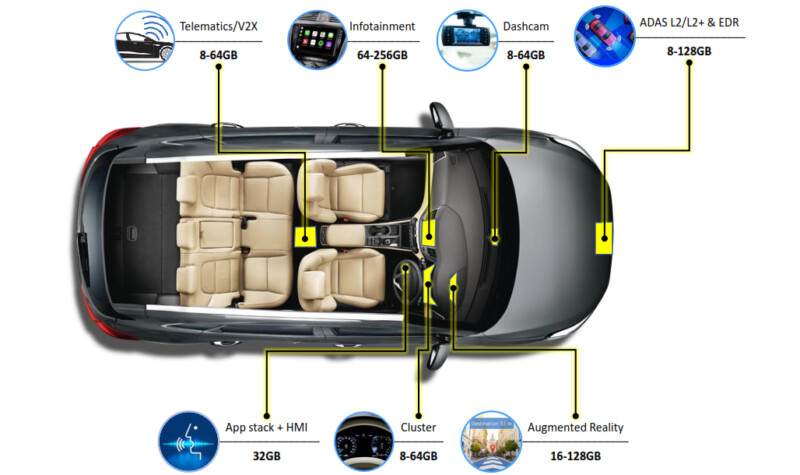 Automotive memory is becoming a larger supply chain concern than many OEMs expected. Recent reporting from S&P Global Mobility found that automotive LPDDR4 prices were already up about 70% year over year by January 2026, with additional increases signaled for 2026 and 2027 as older generation memory supply tightens. The issue is not simply that memory is more expensive. It is that automotive platforms depend on long lifecycle components in a market that is increasingly being reshaped by AI data center demand. (S&P Global)
Why Automotive Memory Is Different
Automotive memory does not behave like consumer electronics memory. A smartphone or laptop platform may change quickly, but vehicle platforms often remain in production for years. After production ends, OEMs still need to support service parts, repairs, warranty programs, and aftermarket needs.
That creates a long lifecycle problem.
If an automaker designs a vehicle around a specific DRAM generation, it cannot always switch easily when supply tightens. Automotive components must meet strict reliability, qualification, and validation requirements. Even a seemingly simple memory substitution can require engineering review, testing, and supplier approval.
This makes automotive memory shortages more difficult to manage than normal commercial shortages.
Why Supply Is Tightening
One major reason automotive DRAM is becoming riskier is supplier prioritization. S&P Global reported that Samsung, SK Hynix, and Micron provide about 88% of automotive DRAM, and that higher margins in data center memory are pushing suppliers to prioritize AI and data center customers.
This does not mean automotive memory disappears overnight. It means automotive buyers are competing in a market where the strongest demand signal is coming from somewhere else.
That matters because older memory generations such as DDR4 and LPDDR4 are still important in vehicles, even as suppliers shift attention toward newer and higher margin technologies. S&P Global has also noted that older generation DRAM prices could rise 70% to 100% in 2026 compared with 2025, depending on contracts and supply conditions. (S&P Global)
Why This Becomes a Lifecycle Risk
For OEMs, the problem is not only the next purchase order. It is the full life of the vehicle program.
A memory shortage can affect:
- Current production schedules
- Future model year continuity
- Service parts availability
- Warranty repair planning
- Long term cost forecasts
This is why automotive memory has to be viewed as a lifecycle risk, not just a sourcing issue.
If supply tightens after a platform is already in production, redesigning around a new memory component can be expensive and time consuming. In some cases, the cost of qualification and delay may outweigh the component cost itself.
Where Storage Enters the Discussion
This is where inventory planning and semiconductor storage become relevant. If OEMs secure critical memory earlier in the lifecycle, they need a way to preserve that inventory safely until it is required.
Memory components are sensitive to moisture, electrostatic discharge, temperature variation, and handling errors. Poor storage can turn secured inventory into unusable inventory.
Effective semiconductor storage helps maintain component integrity through controlled humidity, ESD protection, stable environmental conditions, traceability, and proper handling. For long lifecycle automotive programs, that storage discipline becomes part of the supply strategy.
The Bigger Lesson for OEMs
The automotive DRAM issue shows how quickly a component category can move from routine purchasing to strategic risk. Strong semiconductor growth does not guarantee balanced supply. A market can be expanding while specific segments become harder to access.
For automotive OEMs, memory strategy now requires a longer view. It is no longer enough to ask whether a part is available today. The better question is whether that part will remain available, qualified, and usable throughout the full lifecycle of the program.