
Murata’s MLCC Discontinuations Put Lifecycle Planning Under Pressure
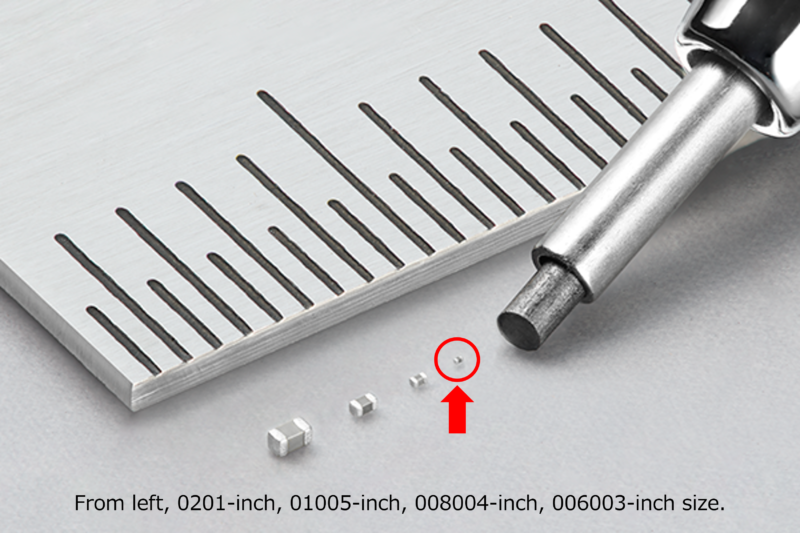 Murata is discontinuing selected MLCC part numbers across nine product series, creating a significant lifecycle planning issue for manufacturers that depend on those exact components. The affected products span general purpose, automotive, and other applications. Customers can place final orders through March 31, 2028, with final shipments scheduled for March 31, 2029.
The extended timeline gives manufacturers an opportunity to qualify alternatives or purchase enough inventory to support remaining production and service requirements. However, that window may be shorter than it appears for products with lengthy engineering and qualification processes.
What the Discontinuation Actually Means
This is not a broad withdrawal from the MLCC market. Murata continues to offer extensive ceramic capacitor lines across consumer, industrial, automotive, and medical applications. The change involves selected part numbers within several product families as the company adjusts its portfolio and manufacturing priorities. (Murata)
That distinction is important for procurement teams. A supplier can continue producing an entire series while discontinuing a specific capacitance, voltage rating, case size, dielectric, tolerance, or other configuration required by a particular design.
For an OEM, the relevant question is therefore not whether Murata will continue making MLCCs. It is whether the exact MPN specified on the bill of materials will remain available for the duration of the program.
Why Replacing an MLCC Is Not Always Simple
MLCCs are relatively inexpensive components, but their role in a qualified design can make them difficult to replace.
An alternative may need to match more than capacitance and voltage. Case size, dielectric characteristics, tolerance, temperature performance, termination, reliability specifications, and other electrical characteristics can all affect whether a replacement is acceptable.
The qualification burden can be even greater in automotive, aerospace, medical, and industrial applications. A replacement may require engineering analysis, testing, supplier approval, documentation updates, and customer qualification before it can enter production.
That creates a meaningful difference between finding an electrically similar capacitor and finding an approved replacement that can actually be used.
The Market Is Also Shifting Toward Higher Value MLCCs
Murata’s portfolio changes are taking place alongside a broader shift in the MLCC market. Demand for high-end, high-capacitance components has increased as AI servers, data centers, automotive electronics, and advanced computing systems require more sophisticated power and signal management.
At the same time, suppliers are adjusting capacity toward products with stronger demand and higher margins. Recent market analysis indicates that some Japanese and Korean manufacturers are reducing their exposure to lower-margin consumer and automotive MLCCs while directing more capacity toward higher-end applications. (TrendForce)
That does not mean every conventional MLCC is becoming difficult to source. It does mean that manufacturers should pay closer attention to individual part numbers rather than assuming that category-level availability reflects the situation for every qualified component.
What OEMs Should Review
An EOL notice should trigger a lifecycle review rather than an automatic decision to place the largest possible last-time buy.
Manufacturers should first determine current consumption, remaining production requirements, service obligations, and the date by which the existing component will no longer be available. They should then evaluate whether an approved alternative exists and how long qualification would take.
The review should include:
- Exact MPN and specification
- Current annual consumption
- Remaining production requirements
- Service and aftermarket demand
- Approved alternate components
- Qualification and validation timelines
- Last-time-buy requirements
- Required storage duration
This approach helps distinguish between components that require a substantial inventory commitment and those that can be transitioned to an approved alternative.
The Role of Long Term Component Storage
When an approved replacement is unavailable or qualification cannot be completed within the available timeframe, a last-time buy may be necessary to support the remaining product lifecycle.
That creates another consideration: how the inventory will be preserved.
MLCCs and other electronic components require appropriate environmental conditions, handling, traceability, and inventory controls when they are stored for extended periods. A last-time buy that sits for several years should remain identifiable, protected, and suitable for production or service use when required.
Controlled semiconductor and electronic component storage can provide that environment while maintaining inventory visibility and documented custody.
For confirmed requirements, securing qualified inventory through authorized channels and holding it under controlled conditions can provide a bridge between a manufacturer’s final production date and the end of the product’s service requirements.
Why Exact MPN Visibility Matters
Murata’s decision illustrates a broader issue in component lifecycle management. Product families can remain active while individual part numbers disappear from the market.
That means category-level supply information is not enough for manufacturers managing long-lived products. Procurement teams need visibility into the exact components on their bills of materials, their remaining production requirements, available alternatives, and the time required to qualify those alternatives.
For OEMs and EMS providers, effective lifecycle planning starts with that level of specificity. The earlier a manufacturer understands that a qualified MPN is approaching end of life, the more options remain for managing the transition without disrupting production or long-term service support.