
Enterprise SSD Demand Is Reaccelerating Into Q4
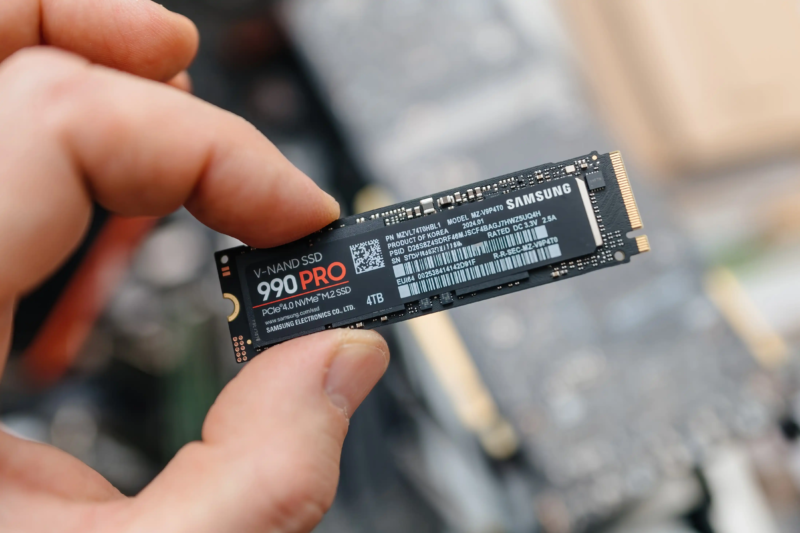 Enterprise SSD demand is entering the fourth quarter with more momentum than many buyers expected. Major U.S. cloud providers have recently increased their demand forecasts, and current market analysis projects fourth quarter enterprise SSD orders could exceed already elevated third quarter volumes.
The significance goes beyond higher demand. It suggests that pricing and allocation pressure across enterprise NAND storage may continue into the end of the year rather than stabilize. Demand is also broadening across both high performance TLC and high capacity QLC products, creating pressure across multiple segments of the enterprise storage market.
Enterprise SSD Demand Is Expanding
Enterprise SSDs have become an increasingly important part of modern data center infrastructure. They provide the high speed, reliability, endurance, and capacity required for databases, cloud computing, AI workloads, and large scale data processing.
The latest demand increase is particularly notable because it is not coming from a single application.
Agentic AI systems are generating additional data retrieval requirements. Vector databases require fast access to large datasets. QLC SSDs are increasingly being used for cache offloading, allowing organizations to manage large data volumes without relying entirely on more expensive memory technologies.
These applications are expanding the role of enterprise storage beyond traditional AI training workloads. (trendforce.com)
Why Q4 Could Look Different From Q3
The latest forecasts point to a potential acceleration rather than a simple continuation of existing demand.
Third quarter enterprise SSD demand was already elevated. If fourth quarter orders exceed those levels, NAND suppliers could face additional pressure when allocating capacity among major customers.
That creates two related risks for buyers.
Pricing may continue moving higher, while available capacity becomes increasingly concentrated among customers with significant purchasing commitments. The result can be a market where supply technically exists but access to specific products becomes more difficult.
Importantly, this does not mean every enterprise SSD configuration will experience the same conditions. Availability can vary significantly by capacity, form factor, interface, endurance class, firmware, and qualified supplier.
Why Exact Configuration Matters
Enterprise SSDs are not interchangeable commodities.
A server or storage system may require a specific capacity, interface, firmware version, endurance rating, physical form factor, or qualification status. Replacing an SSD with another model that appears similar on paper can require firmware validation, reliability testing, thermal analysis, or system qualification.
That makes last minute substitution difficult.
For OEMs and EMS providers, an uncovered fourth quarter requirement therefore carries more risk than simply paying a higher market price. If the exact qualified configuration becomes constrained, there may not be an immediately acceptable alternative.
The Inventory Question
This environment makes inventory planning more complicated.
Companies must balance the cost of holding enterprise SSDs against the potential cost of acquiring them later under tighter allocation or higher pricing. The right inventory level depends heavily on confirmed deployment schedules, qualified configurations, supplier commitments, and expected consumption.
For defined requirements, securing inventory ahead of deployment can provide greater predictability. It also creates a physical supply position that is less dependent on what happens in the spot market later in the quarter.
However, enterprise SSD inventory still needs to be managed carefully. Long periods of storage require appropriate environmental conditions, traceability, and controls to preserve the value of the inventory.
Why Storage Strategy Matters
Enterprise SSDs are high value electronic components. Protecting them after procurement is therefore part of managing the investment.
Controlled semiconductor and electronics storage can help protect inventory from environmental exposure while maintaining detailed records of part numbers, quantities, lots, and handling history. This becomes particularly important when inventory is acquired ahead of deployment and may remain in storage for an extended period.
The objective is not simply to accumulate more inventory. It is to ensure that confirmed future requirements have reliable, qualified supply available when deployment occurs.
What Q4 Demand Could Tell Us
The expected acceleration in enterprise SSD orders provides another indication that data center infrastructure is expanding beyond processors and accelerators. Storage is becoming an increasingly important component of the computing architecture supporting AI, cloud services, databases, and data retrieval.
If fourth quarter demand develops as currently forecast, enterprise SSD buyers could face continued pricing and allocation pressure through the remainder of 2026.
For OEMs, EMS providers, and data center operators, understanding requirements at the exact configuration level will be critical. A broad statement that “SSD supply is available” is not enough. The relevant question is whether the specific qualified drive required for a particular deployment will be available, at the required volume, when it is needed.
That distinction could become increasingly important as enterprise SSD demand accelerates into Q4.