
Memory Prices Are Breaking the Electronics Market
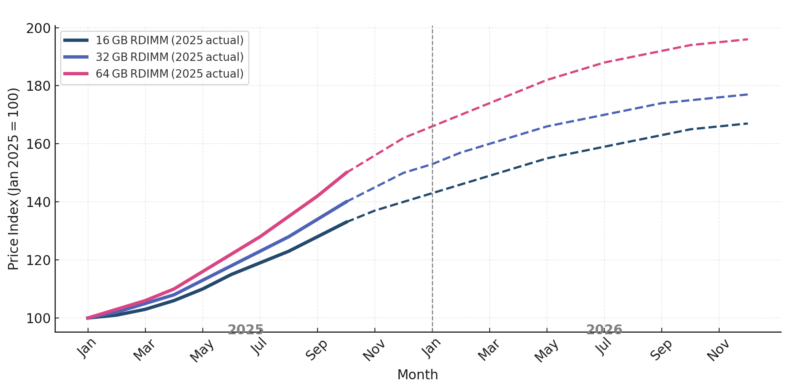 The impact of rising memory prices is no longer confined to the semiconductor industry. It is now spreading into the broader electronics market, affecting everything from consumer devices to industrial systems. Recent reports show that surging DRAM and NAND prices are beginning to pressure manufacturers across multiple sectors, forcing difficult decisions around production, pricing, and product design.
What was once a supply chain issue has become a market-wide constraint.
In this environment, companies are being forced to rethink how they manage semiconductor supply. Increasingly, that means moving away from reactive purchasing and toward semiconductor storage as a strategic tool for stability.
Rising Prices Are Changing Production Decisions
Memory pricing has always been cyclical, but the current environment is different. Demand is being driven by long term structural trends such as artificial intelligence, cloud infrastructure, and data-intensive applications. At the same time, supply remains constrained, particularly for certain memory segments.
As prices rise, manufacturers are facing immediate pressure on margins. Some are delaying product launches. Others are reducing specifications to control costs. In certain cases, companies are passing higher prices directly to customers, which can slow demand or shift buying behavior.
This creates a ripple effect. When memory prices rise, they influence not just semiconductor companies but the entire electronics ecosystem.
Why This Creates Supply Chain Instability
Rising prices are often a sign of imbalance. When demand outpaces supply, availability becomes less predictable. Lead times can extend quickly, and allocation can shift toward higher priority customers.
For manufacturers, this introduces several risks:
• Cost volatility that disrupts financial planning
• Supply uncertainty that affects production schedules
• Increased competition for limited inventory
Even companies with established supply relationships are not immune. When supply tightens, access can change rapidly.
This is where traditional procurement strategies begin to break down.
The Shift Toward Securing and Storing Supply
To manage these risks, companies are moving earlier in the supply chain. Instead of waiting for components to be available, they are securing memory supply in advance and holding it in reserve.
This approach provides two key advantages. It stabilizes pricing by locking in supply before costs rise further. It also protects production by ensuring components are available when needed.
However, holding semiconductor inventory introduces a new challenge. Memory components must be stored correctly to maintain their reliability over time.
Why Semiconductor Storage Is Critical
Memory devices are sensitive to environmental conditions. Moisture exposure can damage components. Electrostatic discharge can degrade performance without visible failure. Temperature variation can impact long term stability.
Without proper controls, stored inventory can lose value before it is ever used.
Effective semiconductor storage addresses these risks. Controlled environments maintain humidity, provide electrostatic protection, and ensure stable temperature conditions. Traceability systems track handling and maintain compliance with quality standards.
With the right storage infrastructure, companies can hold memory inventory for extended periods while preserving performance.
Stability in a Volatile Market
The rise in memory prices is a signal of deeper structural pressure in the semiconductor market. Demand is growing, supply is constrained, and volatility is increasing.
Companies that rely entirely on real time procurement will continue to face uncertainty. Those that secure and store inventory gain a different position. They can stabilize costs, protect production, and operate with greater confidence.
In this environment, semiconductor storage is no longer just about managing inventory. It is about maintaining control in a market where stability can no longer be assumed.