
Companies Are Racing to Control Their Own Chip Supply
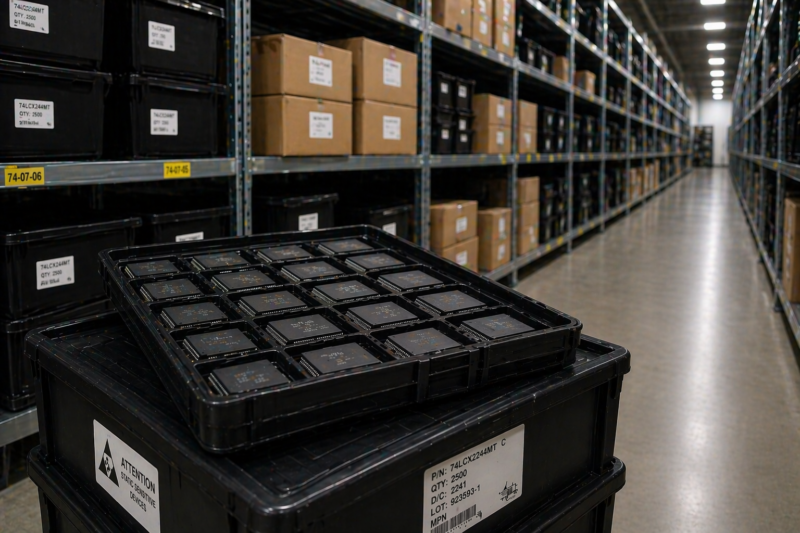 Across the semiconductor industry, a clear shift is underway. Companies are no longer content to rely entirely on external suppliers for critical components. Instead, they are moving upstream, investing in design, fabrication, and packaging capabilities to gain more control over their supply.
This trend toward vertical integration is accelerating. From automotive manufacturers to technology companies, organizations are working to secure direct access to semiconductor production. The goal is simple. Reduce dependence on unpredictable global supply chains and protect long term product availability.
However, controlling production is only part of the equation. To truly stabilize supply, companies must also control when and how that supply is used. This is where semiconductor storage becomes essential.
Why Companies Are Moving Upstream
Recent supply chain disruptions have exposed the risks of relying on third party semiconductor suppliers. Lead times have extended without warning. Allocation has shifted toward higher priority customers. In some cases, companies have been unable to secure the components needed to maintain production.
In response, organizations are investing in greater supply chain control. Some are designing their own chips. Others are partnering directly with foundries. A growing number are exploring fully integrated models that bring multiple stages of semiconductor production under one roof.
This approach reduces exposure to external volatility. It gives companies more visibility into supply and more influence over how capacity is allocated.
But it does not eliminate risk.
Why Control Does Not End at Production
Even when companies secure manufacturing capacity, they still face a critical challenge. Semiconductor supply does not always align perfectly with production timelines. Components may be produced before they are needed. Demand may shift after supply has been secured.
Without the ability to manage inventory effectively, even vertically integrated supply chains can experience instability.
This is especially true for semiconductors. These components are not interchangeable or easily sourced at the last minute. Once production capacity is secured, companies must ensure that supply remains usable and available when needed.
The Role of Semiconductor Storage
Semiconductor storage provides the missing layer of control. It allows companies to separate production from consumption while maintaining flexibility.
By storing components in controlled environments, organizations can:
• Secure supply earlier in the lifecycle
• Hold inventory until it aligns with production needs
• Reduce reliance on real time supply delivery
• Protect against sudden shifts in demand
This transforms inventory from a passive asset into an active tool for supply chain management.
Why Storage Must Be Specialized
Holding semiconductor inventory introduces its own risks. These components are sensitive to environmental conditions and can degrade over time if not properly stored.
Moisture exposure can damage devices. Electrostatic discharge can weaken circuitry. Temperature instability can impact long term reliability.
Effective semiconductor storage environments address these risks through controlled humidity, electrostatic protection, and stable temperature conditions. They also include traceability systems that ensure full visibility into inventory handling and compliance.
With the right storage infrastructure, companies can maintain inventory for extended periods without compromising performance.
From Ownership to Control
The push toward vertical integration reflects a broader shift in how companies think about semiconductor supply. Ownership of production is important, but it is not enough on its own.
True control requires the ability to manage supply across time. It requires flexibility in when components are deployed and confidence that stored inventory will remain reliable.
Semiconductor storage enables this level of control.
As companies continue to move upstream, storage becomes a critical part of the strategy. It ensures that securing supply translates into usable, dependable inventory that supports production over the long term.
In this new environment, the companies that succeed will not just control where their chips are made. They will control how their supply is managed from production through deployment.
Semiconductor storage is what makes that possible.