
Supporting Long-Tail Builds After Design Freeze
In many sectors—especially aerospace, defense, medical, and industrial controls—products can remain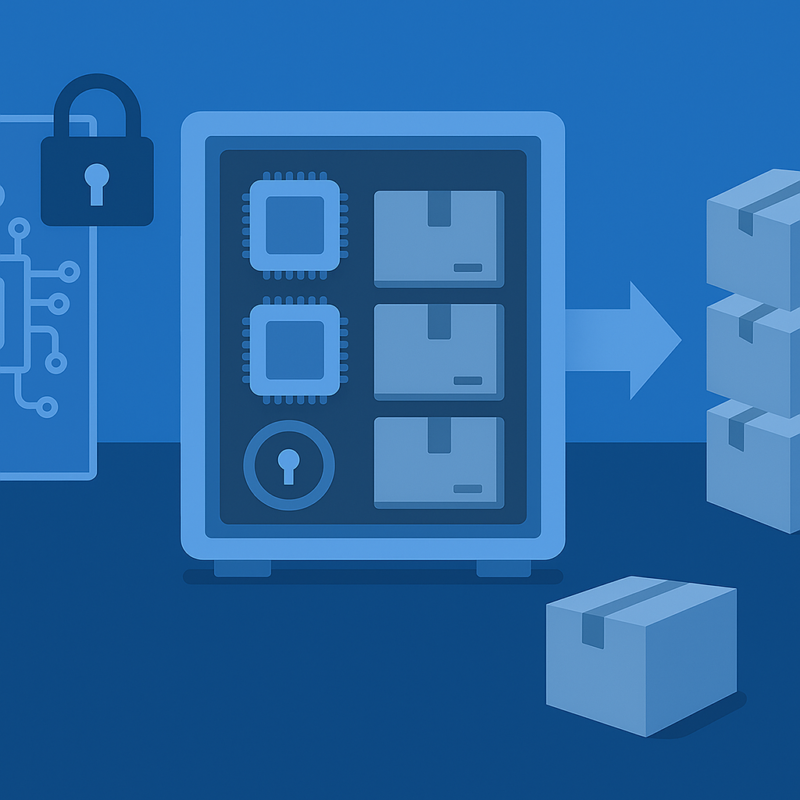 in production or field support for 10, 15, even 25 years. But while the lifespan of the product is long, the window to secure critical components is often alarmingly short. Once a design is frozen and bill of materials (BOM) is locked, procurement teams enter a new phase: supporting long-tail builds with fixed parts, shrinking supply, and no margin for substitution.
It’s a quiet risk that many OEMs underestimate—until the last-time buy opportunity has passed.
The Post-Freeze Dilemma
After a design freeze, engineering changes become cost-prohibitive or impossible. Component flexibility disappears. But the product still needs to ship for years to come. This creates a supply tension that standard procurement models aren’t built to solve.
Even if a company makes a large last-time buy to hedge availability risk, that inventory must now be stored securely, managed properly, and delivered gradually across multi-year drawdowns. Few organizations are set up to do this efficiently in-house—especially when dealing with climate-sensitive, serialized, or compliance-critical components.
A Strategic Solution: Inventory Ownership + Fulfillment
OEMs are increasingly turning to inventory ownership partners like Partstat to bridge this gap. In this model, Partstat purchases and stores long-tail inventory in secure, climate-controlled facilities. The inventory is preserved with long-term integrity, and released only as production needs arise—sometimes years after the original buy.
This ensures:
No degradation of quality over time
No capital locked on the balance sheet
No fulfillment burden on internal teams
It’s not just about holding parts—it’s about sustaining the product line, protecting customer contracts, and avoiding unplanned redesigns.
Why It Matters Now
As lead times shrink and obsolescence cycles accelerate, the risk window between design freeze and component unavailability is tightening. Long-tail builds require more than procurement foresight—they require an inventory infrastructure that supports continuity, not just acquisition.
Inventory ownership and drawdown fulfillment aren’t reactive tools—they’re how the most resilient product teams are planning ahead.