
Managing Semiconductor Obsolescence in Aerospace and Defense
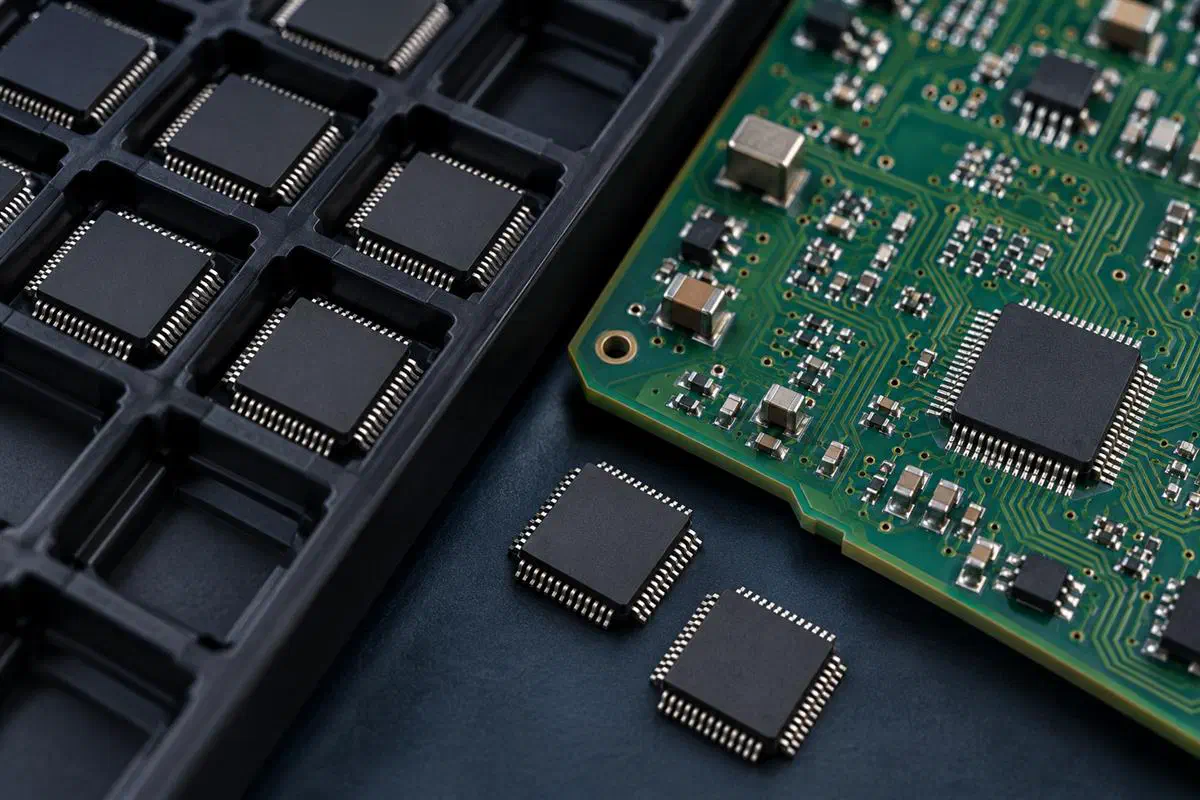 Semiconductor obsolescence is forcing aerospace and defense programs to make decisions that extend well beyond replacing unavailable parts. A January 2026 NXP discontinuation notice illustrates the problem: selected legacy devices are being withdrawn because aging production equipment and processes have lost supplier support, making continued manufacturing unsustainable. Customer demand alone cannot preserve that manufacturing capability.
For programs supporting long-lived equipment, the consequence is a gap between the components a system was designed around and those available to sustain it. The manufacturing base can change while an approved design remains in service. Managing that gap requires procurement, engineering, and sustainment teams to act before inventory runs out.
When a Shortage Becomes a Lifecycle Problem
Diminishing Manufacturing Sources and Material Shortages, or DMSMS, describes the loss or impending loss of suppliers of required items, materials, or software. Unlike a temporary delivery delay, semiconductor discontinuation can remove the original production source permanently. Waiting for lead times to improve may accomplish nothing.
Commercial component availability can end well before an aerospace or defense platform leaves service. This does not mean every chip has a shorter lifecycle; the exposure arises when a particular qualified device cannot support the remaining program life. A component's relevance to an existing design and its manufacturer's ability to keep producing it are separate questions.
Updated Guidance Emphasizes Earlier Action
DoD Instruction 4245.15 already requires proactive, risk-based DMSMS management throughout the lifecycle, including evaluating designs and redesigns for future obsolescence. Its September 2025 change was administrative, rather than a new set of substantive obligations.
The 2026 developments include an updated SD-22 guidebook and June's SD-26 contracting guide. The latter provides illustrative requirements covering issue notifications, reporting, and requirements passed to subcontractors. These are examples for developing contracts, not automatically binding requirements for every supplier.
Compare Inventory Coverage With Qualification Time
A suggested replacement is only a starting point. NXP explicitly cautions that its replacement designations do not establish equivalent form, fit, function, or performance until customers qualify the products against their specifications. Depending on the application, substitution may require board changes, firmware revisions, testing, and requalification.
Start with components whose absence would stop production or repairs and that have no approved substitute. Compare usable inventory and confirmed incoming deliveries with expected production and repair demand. Then ask engineering when an alternative could realistically complete qualification and enter production. Prioritize parts where existing supply could run out before that transition is complete.
For example, if inventory covers 18 months of demand but qualification and implementation are expected to take 24 months, the plan has a six-month coverage gap before any allowance for delays. This hypothetical comparison helps establish whether a bridge buy could support the transition or whether a longer-term inventory commitment needs evaluation.
Component monitoring and product change notices should feed this assessment, with responsibility assigned for each response. An alert is useful only if someone determines which assemblies are affected, what supply remains, and when a decision must be made.
Size Last-Time Buys Around the Remaining Program
A bridge buy supports a defined transition; a life-of-type buy aims to cover the remaining need for the original component. Distinguishing those purposes helps avoid buying against an assumed redesign date while overlooking equipment that will continue using the old configuration.
Include planned builds, repair demand, sustainment, and uncertainty around equipment retirement. Confirm the manufacturer's last-order deadline and actual supply availability rather than treating a published purchasing window as an inventory guarantee. Review the demand assumptions with engineering and program management before committing funds.
The Air Force's April 2026 budget justification for the HH-60W identifies bridge buys, life-of-type buys, production-protection purchases, and redesign engineering as potential DMSMS activities. These options illustrate why obsolescence decisions need to connect production, modernization, and sustainment planning.
Fund and Preserve Inventory Until It Is Needed
The deadline to secure supply may arrive years before the components are consumed. That separates the purchasing decision from the production schedule: a program must determine how much to secure, how to fund it, and how to preserve and release it over time.
An inventory ownership approach can address the funding side by having a partner purchase and hold inventory for future requirements, subject to the arrangement's terms. It still requires a credible demand forecast and a defined release plan. Moving the funding responsibility does not remove the risk of buying too much, buying too little, or selecting the wrong components.
Qualified inventory should be secured through authorized channels with traceability and documented custody. Semiconductor shelf life depends on packaging, moisture sensitivity, materials, and storage conditions. Teams evaluating long-term semiconductor storage and fulfillment should establish handling requirements, lot visibility, and delivery responsibilities across their production and repair partners.
For OEMs and EMS providers, the useful outcome is a funded plan that keeps qualified components available until an approved alternative is ready or the remaining requirement ends. Inventory can protect the time needed for engineering work, but it cannot replace qualification or redesign. Coordinating those decisions before supply closes gives programs more options for maintaining production and long-term readiness.