
Semiconductor Decoupling Is Getting Complicated
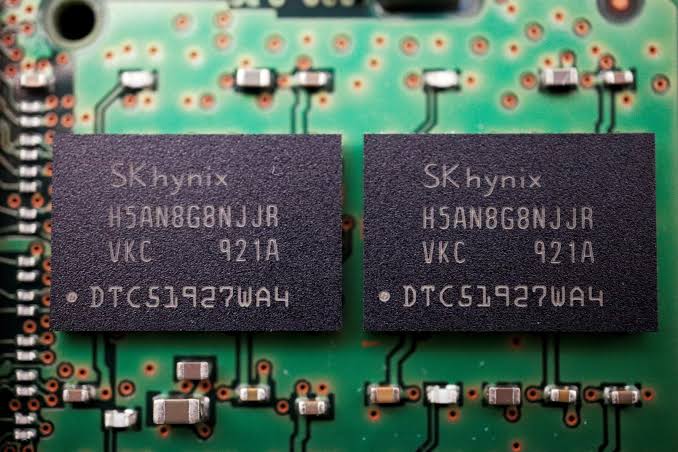 The effort to separate semiconductor supply chains between China and the United States is proving more complicated than simply moving factories from one country to another. Today’s developments around SK hynix illustrate why.
SK hynix is reportedly seeking U.S. approval to bring additional American semiconductor manufacturing equipment into its Dalian, China NAND facility while linking that request to plans for a potential new NAND factory in the United States through its Solidigm subsidiary. The Dalian facility contains unused manufacturing space that could support additional production, while a new U.S. facility would expand domestic NAND capacity.
The situation demonstrates how deeply integrated the semiconductor industry remains, even as governments pursue greater regional independence.
Why Semiconductor Supply Chains Are Difficult to Separate
A modern semiconductor manufacturing network is not confined to one country. Companies can design products in one region, manufacture wafers in another, source equipment from several countries, package components elsewhere, and distribute finished products globally.
SK hynix’s Dalian operation is a useful example. The facility originated through the company’s acquisition of Intel’s NAND and SSD business and became part of its broader NAND manufacturing network. (SK hynix)
That creates dependencies that are difficult to unwind quickly. Moving production requires more than constructing a new facility. Equipment must be installed, processes must be qualified, production must reach acceptable yields, and customers must approve the resulting products.
Export Controls Are Changing Investment Decisions
U.S. export controls have added another layer of complexity. In 2025, the Commerce Department removed the license-free VEU authorization that had applied to foreign-owned semiconductor fabs in China. The department said licenses would generally support existing operations but would not be granted for capacity expansion or technology upgrades. (BIS)
That policy creates an unusual planning environment for companies operating across both markets.
A manufacturer may have productive assets in China that remain economically valuable while simultaneously being encouraged to build additional capacity in the United States. The challenge is determining how to operate the existing footprint while developing a second regional supply base under changing regulatory conditions.
SK hynix has stated that equipment installation at its Dalian Mod B facility is proceeding in consultation with and under authorization from the U.S. government, and that it is not seeking to expand capacity there. That position is important because the reported proposal and the company’s public characterization of the project are not identical.
The Economics of Maintaining Multiple Footprints
Regional diversification can improve resilience, but it also creates additional costs and complexity.
Operating facilities across multiple countries means managing different regulatory environments, supplier networks, logistics routes, labor markets, equipment requirements, and qualification processes. Companies must also determine which products should be manufactured in each location and how much redundancy is economically justified.
For NAND manufacturers, the decision is particularly significant because production capacity is expensive and takes years to develop. Leaving existing capacity underutilized can be inefficient, but expanding it may conflict with regulatory restrictions.
This is why semiconductor decoupling is unlikely to happen as a clean separation. Companies are more likely to build overlapping supply networks while continuing to use portions of their existing global footprint.
What This Means for Semiconductor Buyers
OEMs and EMS providers are affected by these decisions even when they have no direct involvement in fab operations.
Changes in manufacturing locations can affect supplier qualification, country of origin, lead times, allocation, logistics, and the availability of specific NAND products. A component that appears to have multiple sources may still depend on the same underlying manufacturing network or equipment ecosystem.
For long lifecycle programs, those dependencies deserve particular attention. Companies may need to understand not only who supplies a component, but where it is manufactured, which facilities support it, and whether alternative production locations are actually qualified.
Inventory planning can provide another layer of flexibility during these transitions. Qualified components, wafers, or die can be secured and maintained in controlled storage while manufacturing footprints and supply arrangements evolve. This can be particularly relevant when moving between suppliers or production regions requires lengthy qualification.
A More Complicated Path to Semiconductor Independence
The latest SK hynix situation illustrates why semiconductor decoupling is difficult to execute in practice. Governments can restrict equipment exports and encourage domestic investment, but companies still have to manage existing factories, installed equipment, customer commitments, production economics, and global supply relationships.
The result is likely to be less of a clean separation and more of a gradual restructuring. Production will become more geographically diversified, but existing facilities and supplier relationships will not necessarily disappear.
For semiconductor buyers, understanding that transition is important. Regional diversification can create new sources of resilience, but it can also introduce new layers of complexity that need to be accounted for in sourcing, qualification, and inventory planning.