
What Europe’s E-Waste Push Reveals About Supply Security
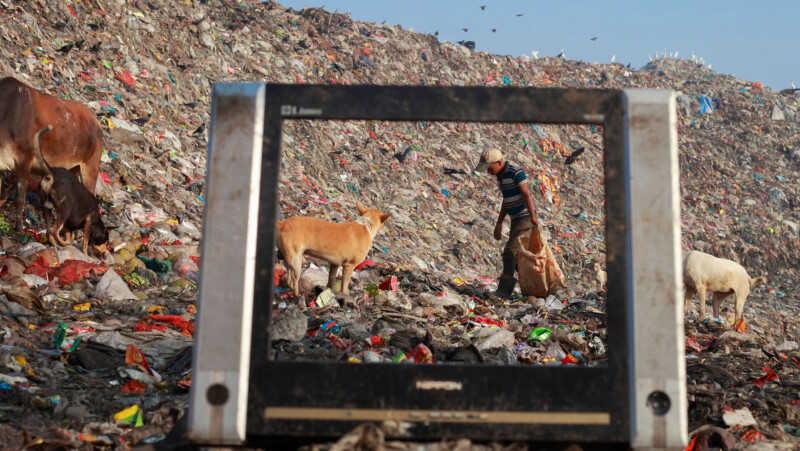 Europe’s growing focus on electronic waste highlights a shift in how supply security is being discussed. The issue is no longer only about mining more materials or finding new suppliers. It is also about recovering value from electronics that have already moved through the market.
The timing matters. The EU is trying to reduce dependence on concentrated critical material supply chains while increasing the share of strategic raw materials recovered from recycled sources. Under the Critical Raw Materials Act, the EU set a 2030 benchmark for recycling capacity to produce at least 25% of annual strategic raw material consumption. (European Commission)
Why E-Waste Matters to Supply Security
Electronic waste contains materials that are difficult, expensive, or geopolitically sensitive to source. Circuit boards, connectors, batteries, displays, motors, sensors, and power electronics can contain copper, aluminum, precious metals, rare earth elements, lithium, cobalt, nickel, gallium, and other important inputs.
The problem is scale.
Globally, e-waste reached a record 62 million tonnes in 2022 and is projected to rise to 82 million tonnes by 2030. Yet documented recycling has not kept pace, and only a small share of strategically important materials is being recovered effectively. (CEP | Circular Electronics Partnership)
That creates a supply paradox. Manufacturers are concerned about access to critical materials, while large volumes of electronics containing recoverable value are being underutilized.
Why Recovery Is More Complicated Than Recycling
E-waste recovery is not as simple as collecting old electronics and extracting metals.
Modern electronics are complex assemblies. Components are smaller, more integrated, and often difficult to separate without damaging recoverable material. Some devices contain adhesives, coatings, batteries, embedded sensors, and mixed material layers that make disassembly harder.
There is also a quality issue. Recovered materials must meet strict purity and consistency requirements before they can be reused in demanding electronics, semiconductor, automotive, aerospace, or medical applications.
That means supply security depends on more than recycling volume. It depends on collection systems, sorting quality, component removal, material recovery technology, traceability, and the ability to return recovered inputs into qualified supply chains.
How This Connects to Electronics Inventory
The e-waste discussion also raises a larger point about inventory management.
Not every unused component should become waste. Excess electronics inventory, obsolete parts, surplus components, and end-of-life materials often lose value because they are not identified, preserved, or redirected early enough.
For OEMs and EMS providers, this matters because inventory can sit between two outcomes. If it is poorly stored, undocumented, or forgotten, it may eventually become scrap. If it is properly managed, it may retain value for service programs, lifecycle support, resale, repair, recovery, or controlled disposition.
That makes storage and documentation part of the supply security conversation.
Why Preservation Comes Before Recovery
Before electronics can be reused, resold, harvested, or recycled, they must remain identifiable and usable.
Semiconductors and electronic components are sensitive to moisture, electrostatic discharge, contamination, temperature variation, and handling conditions. Poor storage can reduce the value of inventory long before a recovery or reuse decision is made.
Controlled storage helps preserve optionality. Components that remain traceable, protected, and properly documented are easier to evaluate for future use. They are also easier to separate from true waste when lifecycle decisions are made.
This is especially important for long lifecycle industries such as aerospace, defense, industrial, medical, and automotive manufacturing. In these sectors, a component that appears obsolete in one program may still support service, repair, or continuity needs in another.
Supply Security Requires Better Lifecycle Visibility
Europe’s e-waste push shows that supply security is not only about new production. It is also about better visibility into what already exists.
That includes finished products, retired electronics, excess inventory, service parts, component stock, and recoverable materials. The more visibility companies have into these categories, the better they can decide what should be preserved, reused, redeployed, harvested, or recycled.
This approach does not replace mining, refining, or new semiconductor production. It adds another layer to the supply strategy.
As critical material pressure grows, manufacturers will need to think more carefully about the full lifecycle of electronics. The value of a component does not end when it leaves production. In many cases, value is lost because inventory was not tracked, stored, or evaluated properly before it became waste.
Supply Security Starts With What Already Exists
The push to recover more critical materials from e-waste reflects a broader lesson for electronics supply chains.
Companies cannot control every mine, refinery, trade policy, or export restriction. They can, however, improve how they manage the inventory already in their possession.
That means preserving usable components, documenting custody, separating recoverable material from true scrap, and making lifecycle decisions before value is lost.
For manufacturers facing longer lead times, material pressure, and rising supply uncertainty, electronic waste is not only an environmental issue. It is a supply security issue.