
AI Is Consuming Memory Supply Faster Than It Can Be Produced
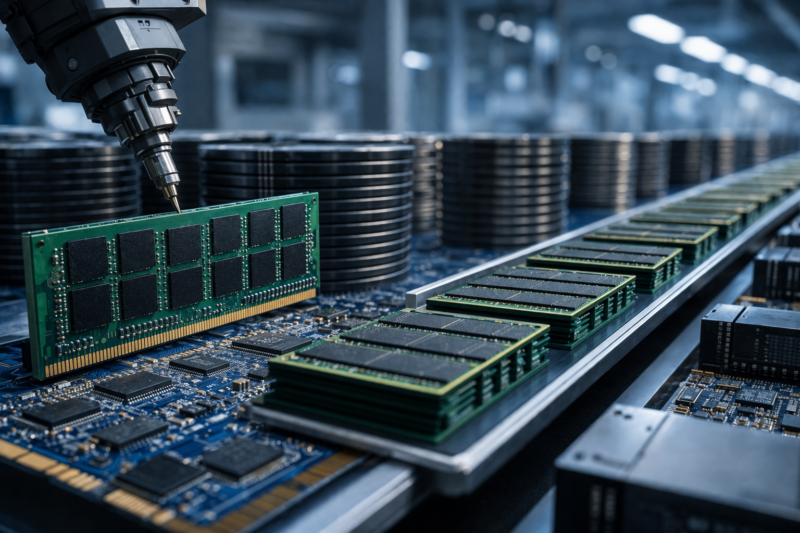 The semiconductor industry is entering a new phase of constraint. This week, reports confirmed that artificial intelligence demand is absorbing a growing share of global memory supply, with data centers and hyperscalers prioritizing access to high performance DRAM and advanced memory technologies. The result is not just a shortage. It is a reallocation of supply at a global scale.
This shift is creating a new reality for companies outside the AI ecosystem. Automotive, industrial, and medical manufacturers are no longer competing within their own sectors. They are competing with AI infrastructure for the same underlying semiconductor resources.
In this environment, semiconductor storage is becoming a critical strategy for maintaining access to supply.
AI Is Redirecting the Memory Market
Artificial intelligence workloads require massive amounts of memory. High bandwidth memory and advanced DRAM are essential for training and running large models. As investment in AI accelerates, suppliers are prioritizing these high demand applications.
This creates a structural imbalance. Even when overall production increases, a larger share of supply is directed toward AI. Other industries are left with reduced availability, longer lead times, and less predictable allocation.
This is not a temporary surge. It is a long term shift in how semiconductor supply is distributed.
Why This Creates Risk for Other Industries
For companies outside the AI sector, the challenge is not just availability. It is uncertainty.
Supply can tighten quickly as allocation shifts. Lead times can extend without warning. Pricing can become volatile as demand outpaces supply. Even companies with strong supplier relationships can find themselves competing for limited inventory.
Traditional supply chain strategies struggle in this environment. Just in time models depend on consistent availability. When supply is redirected, there is no margin for delay.
The Shift Toward Securing and Storing Supply
To manage this risk, companies are moving earlier in the procurement cycle. Instead of waiting for demand signals, they are securing memory components in advance and holding them in reserve.
This approach creates a buffer against allocation pressure. When supply becomes constrained, stored inventory allows production to continue without interruption. It also reduces reliance on spot purchasing, which often comes at higher cost and greater risk.
However, this strategy depends on the ability to store semiconductors effectively.
Why Semiconductor Storage Is Essential
Memory components are sensitive to environmental conditions. Moisture exposure can damage devices. Electrostatic discharge can degrade performance without visible signs of failure. Temperature instability can impact long term reliability.
Without proper controls, stored inventory can lose value over time.
Effective semiconductor storage addresses these risks through controlled humidity, electrostatic protection, stable temperature conditions, and full traceability. These environments allow companies to store memory components for extended periods while maintaining quality and compliance.
With the right storage infrastructure, inventory becomes a strategic asset rather than a liability.
A New Competitive Dynamic
AI demand is not just increasing semiconductor consumption. It is reshaping who gets access to supply. Companies that rely on real time procurement will continue to face uncertainty as allocation shifts toward higher priority markets.
Those that secure and store inventory gain a different position. They are no longer reacting to supply conditions. They are operating with a controlled reserve that supports stable production.
In this new environment, access to semiconductors is becoming a competitive advantage.
Semiconductor storage is what makes that advantage possible.