
The Real Problem Isn’t Chip Shortages, It’s Wafer Access
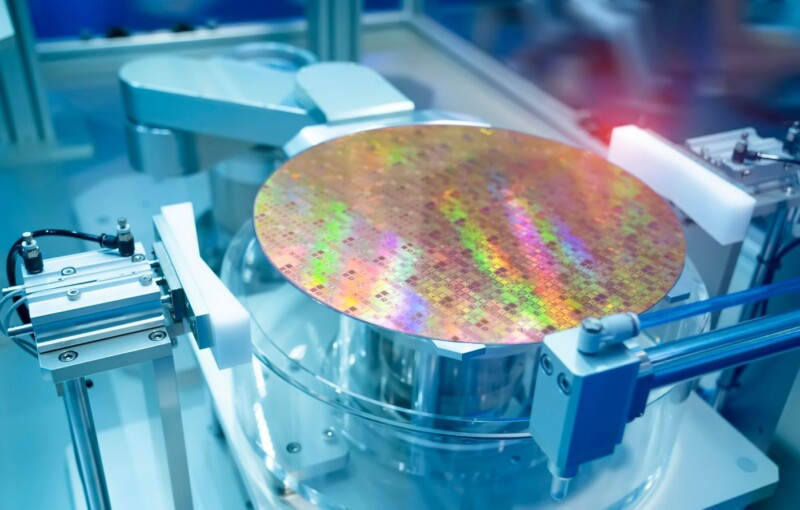 Recent industry signals are pointing to a structural shift in semiconductor supply. Executives across the sector have warned that wafer shortages could persist through the end of the decade, with supply expected to fall short of demand by a meaningful margin. This is not a short term imbalance. It reflects a deeper mismatch between how quickly demand is growing and how slowly semiconductor capacity can be expanded.
In this environment, companies are being forced to rethink how they secure and manage semiconductor supply. Increasingly, the answer is not just sourcing. It is long term semiconductor storage and die and wafer banking.
Why Wafer Supply Cannot Keep Up
Building semiconductor capacity is one of the most capital intensive and time consuming processes in the global economy. New fabrication facilities take four to five years to design, construct, and ramp to full production. Even with aggressive investment across the United States, Europe, and Asia, new capacity will not immediately relieve supply constraints.
At the same time, demand continues to accelerate. Artificial intelligence infrastructure, electric vehicles, industrial automation, and advanced electronics are all driving higher semiconductor consumption. These trends are not cyclical. They represent long term structural growth.
As a result, wafer supply is expected to remain constrained for years.
Why This Changes Inventory Strategy
In a market where supply is tight for months, companies can rely on short term buffers. In a market where supply is constrained for years, that approach breaks down.
Manufacturers are now being forced to think in multi year time horizons. Instead of securing components just ahead of production, they are looking further upstream. They are securing wafer capacity itself or locking in supply earlier in the manufacturing process.
This is where die and wafer banking becomes critical.
The Role of Die and Wafer Banking
Die and wafer banking allows companies to secure semiconductor supply before final packaging and assembly. Instead of waiting for finished components, manufacturers can purchase wafers or die early in the lifecycle, store them in controlled environments, and package and deploy them when needed.
This approach provides several strategic advantages. It secures supply before capacity becomes constrained. It gives companies flexibility in how and when components are finished. It reduces exposure to future allocation risk.
However, this strategy only works if storage conditions preserve the integrity of the wafers and die.
Why Semiconductor Storage Becomes Infrastructure
Storing wafers and die is fundamentally different from storing finished components. These materials are highly sensitive to environmental conditions and require precise control to maintain usability over time.
Effective semiconductor storage for die and wafer banking requires controlled humidity and temperature environments, protection from contamination and electrostatic discharge, long term stability for multi year storage, and full traceability and handling control.
Without these safeguards, stored wafers or die can degrade, eliminating the value of early procurement.
This is why semiconductor storage is evolving from a supporting function into a core piece of infrastructure. It is no longer just about holding inventory. It is about preserving supply over extended time horizons.
From Supply Chain to Supply Control
Wafer shortages extending into 2030 signal a fundamental change in the semiconductor industry. Companies can no longer rely on market availability to meet demand. They must take a more active role in securing and managing supply.
Die and wafer banking, supported by specialized semiconductor storage, provides a path forward. It allows companies to move upstream, secure critical materials earlier, and maintain control over when and how that supply is used.
In a world where capacity cannot expand fast enough to meet demand, the companies that control their inventory will be the ones that maintain production.
Semiconductor storage is no longer just a logistics function. It is becoming long term infrastructure for supply chain resilience.