
Historic Natural Disasters in China and Germany Wreaks Havoc on Global Supply Chain
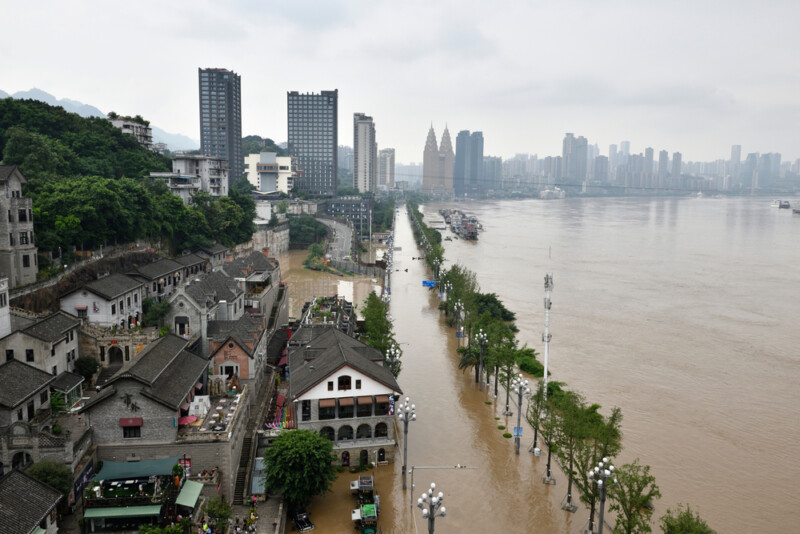
Manufacturers can add one more challenge to the list in a year that has been filled everything from extended lead times, to canal blockages, price inflation, and supply chain-wide cyber hacks. Now, key regions in the global supply chains are experiencing a streak of unexpected natural disasters that are leaving analysts concerned about what the long-term effects might be moving into 2022.
The Henan province is China is a critical region for the global manufacturing landscape. In total, 26% of China’s production capacity of led comes from Henan, as well as 5% of the country’s electrolytic aluminum which is used in aluminum products. This past month, the region has experienced what has been called a “one in one thousand year event” of historic flooding, which to date has killed at least 73 people and affected 13 million residents, or 13% of the total population.
The flooding has only compounded the pressures Henan was already facing as a result of factors including the COVID-19 pandemic. Lead and aluminum plants in Henan were not running at full capacity due to local government restrictions on coal shipments, and Bauxite, the primary ore used in aluminum, was already experiencing significant shortages.
“Ore supply and transportation will be seriously affected in the medium and long term,” said Zhang Yu, and analyst from online pricing and intelligence service MySteel in an in an interview with China Macro Economy. “As factories will face production cuts, they will also consider buying imported ore that is sitting at ports, so bauxite prices will definitely rise.”
Although most aluminum plants have since resumed production, certain segments of the market will not be able to recover so quickly. According to analysts, production of electrolytic aluminum will take over 30 days to resume.
The Zhengzhou province is also experiencing heavy flooding, which is the home of Foxconn, the acclaimed EMS provider for Apple, and China’s largest car manufacturer SAIC Motor. The New York Post reports that, thus far, a smaller Foxconn facility that produces desktop has seen damages. According to the Chinese Meteorological Administration, Shanghai and the nearby provinces of Zhejiang, Fujian, and Jiangsu should be expecting periods of heavy rainstorms and gales, as well.
Germany has also seen a period of unpresented flooding due to heavy rains across the eastern Ruhr, which has had a devastating impact on the regions output of both coil products and steel. In Hagen, a forge owned by Schmiedag, known for making parts for big engines, trains and special vehicles, was flooded completely, with 17 employees forced to flee to the roof and to be rescued by the fire department hours later.
Although the long-term impacts of these natural disasters are difficult to forecast currently, as the recent Suez Canal blockage proved, even a delay of few day or weeks can have disastrous consequences for manufacturers, and those consequences inevitably trickle down to consumers in the form of shortages and higher prices. For future disruptions, comprehensive supply chain risk mitigation strategies must be considered such as secure, natural-disaster-proof inventory warehousing facilities and inventory ownership solutions such as Partstat Inventory Financing that can allow manufactures to minimize just-in-time inventory shipments and avoid disruptions, as well as price inflation issues.